

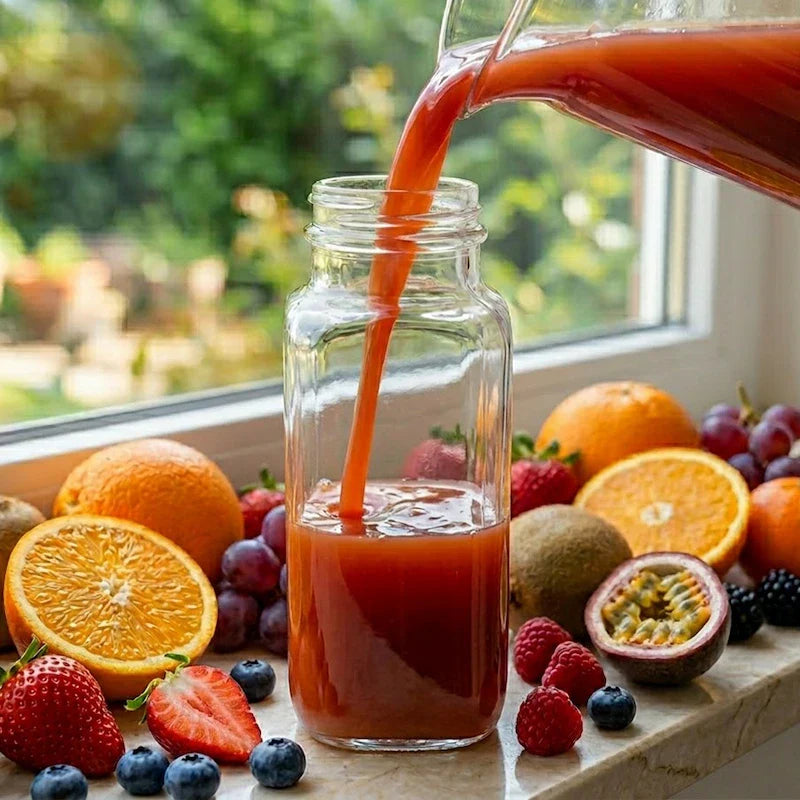
The right container keeps your homemade juice fresh longer. We compared the most common juice containers—their pros and cons—to help you choose the best one for storing juice.

1: Mason Jars
Mason jars is safe and easy to clean and when you tied Mason Jars with twine, they have a charming, rustic look—so it’s no wonder many people choose them.
But the mason jars have a wider opening than glass bottles, which increases the juice’s exposure to air. If you want your juice to stay fresh for longer, a container with a smaller mouth would be better.
2: Glass Bottles, Best overall choice
- Easy to clean
Smooth surface is easy to clean, and it does not absorb odors or retain stains.
- Perfect size
Glass bottles usually have a narrower opening than mason jars, reducing air contact.
- Safe material
Glass is a safe material that does not react with acidic juice.
3: Plastic Bottles
Advantages:
- Lightweight
Disadvantages:
- Can absorb flavors and odors over time.
- May become stained by colorful juices.
- Wear out faster, less durable compared to glass or stainless steel bottles.
4: Stainless Steel Bottles
Advantages:
- Tough and won’t shatter like glass.
Disadvantages:
- Unsuitable for acidic beverages—this is the main reason I wouldn’t use stainless steel bottles for storing juice.
- Opaque design makes it difficult to see the juice inside, so it is harder to notice if the juice has gone bad.
Glass containers are generally the best choice for storing fresh juice, and reusable options like our glass bottle set make it easy to portion, store, and keep juice fresh.

Learn more about fresh juices in this guide to cold-pressed juices👈
Tips for Keeping Juice Fresh Longer
- Store in the refrigerator immediately after bottling.
- Avoid opening the bottles repeatedly, as repeated exposure to air speeds up oxidation.
- Opt for a set of small bottles, allowing you to enjoy one serving at a time instead of opening a large bottle repeatedly.
- Leak-proof lids with foam gaskets also help keep air out and make juice last longer.
Tips for storing juice in batches
- It’s best to make juice in batches every three days—after that, the flavor starts to decline and it may spoil.
- Fill the containers as much as possible to minimize the amount of air inside.
- Adding citrus fruits to your recipes can increase acidity and help extend shelf life.
Share:
Is Cold Pressed Juice Good for You? – 5 Advantages of Cold Pressed Juice
Do you have to peel ginger before juicing?